Battle of the Beaks

This week in class we simulated the pressure of natural selection. We had a variety of bird "beaks" (everything from chop sticks to binder clips), all of which were competing for different food varieties (white bean "beetles", elastic band "worms, etc). Some beaks were proficient at picking up one food type and getting into their paper cup stomach, while other beaks were better suited for other food types. And some beaks had a rough go no matter the food type.
These different beaks represent different genetic traits in a population of birds. Those birds with the best-suited beak for the available food would live longer and therefore have the opportunity to reproduce more often. Less successful birds, with less energy acquired through feeding, would be more vulnerable to prey or hard conditions and not live as long, and reproduce less often. Thus, there would be a shift in the frequency of the genes in the population (we call this microevolution), with the genes of the first bird increasing and the genes of the second bird decreasing.
If this slow, incremental change continues over a very long period of time (remember our very long timescale of the history of the earth), the cumulative difference can be quite significant. Think about dinosaurs evolving into birds. We call this macroevolution.
Looking Ahead to wk 12
The weeks are ticking away! This week is about the evidences for evolution. While evolutionary theory is not bullet proof, it has a great deal of evidence supporting it. Because of the limitation of time, we cannot do controlled experiments for macroevolution. We can, however, study the evidences. These evidences fall into 4 major categories:
- Fossil Evidence - this includes relative dating and radiometric dating, among others
- Comparative Anatomy Evidence - this includes studying embryology and development, homologous structures, analogous (homoplastic) structures, and vestigial structures, among others
- Biogeography Evidence - historical distributions or organisms and the correlation to plate tectonics
- Molecular Biology Evidence - this includes sequencing and comparing sections of DNA/RNA and proteins, molecular clock, phylogenetic relationships, among others
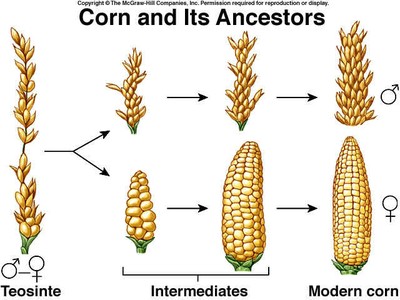
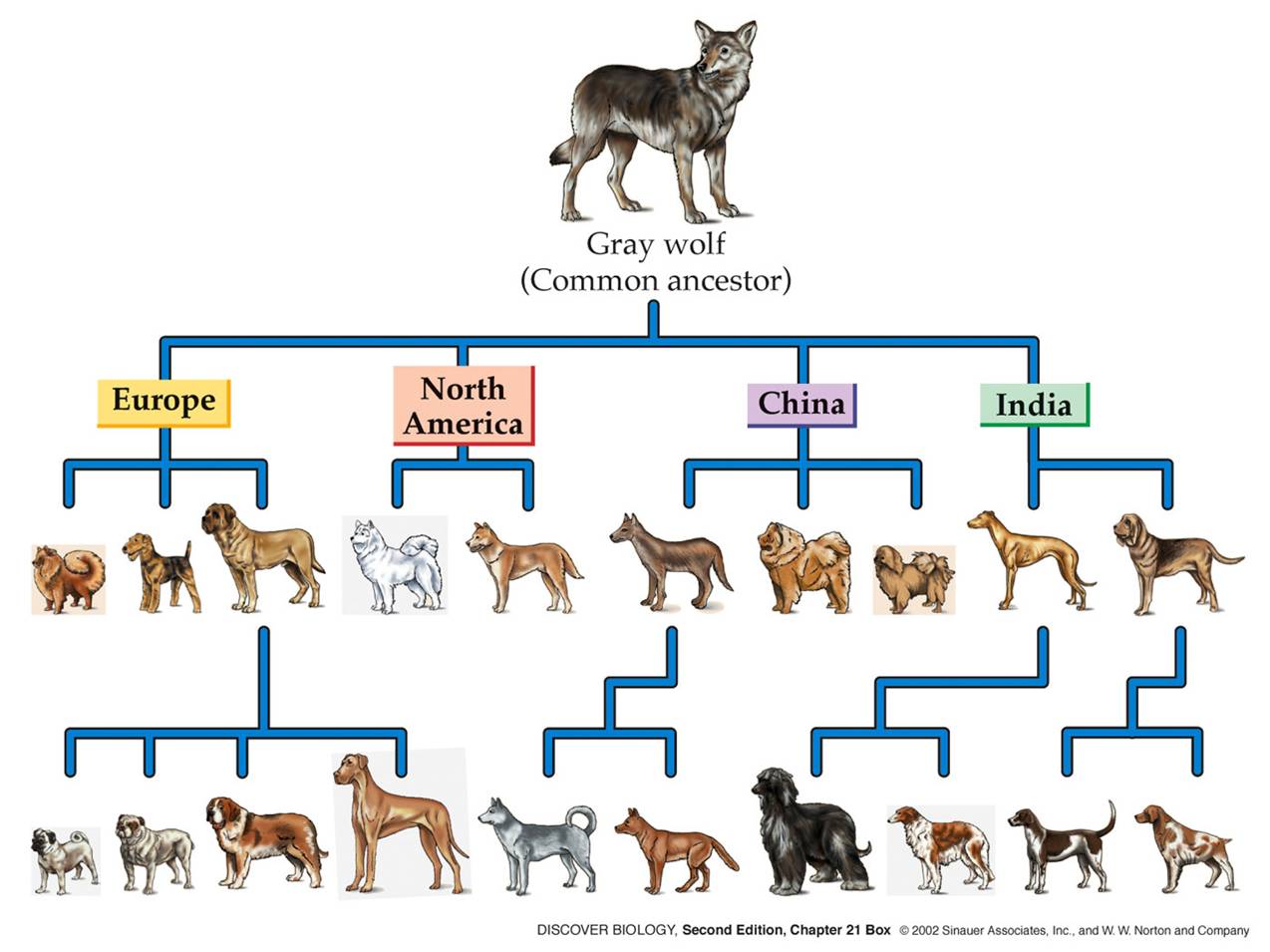
We can see evidences of microevolution within our own lifetime, such is in bacterial development of antibiotic resistance. The ability to selectively breed plants and animals - like corn that has bigger ears on separate structures from the tassel, or dogs that have certain physiques and coat varieties - demonstrates how selection (in this case not natural but human-based) can change the genetics of a population over time.
Readings and Other Resources
|
Evolution 3 -
Evidence and
|
Ch. 22 Evidence and
Ch. 23 When
|
LOE rest of Ch 4
|
CK12 BC use the CK12 LSC sections
|
CK12 LSC 4.4-4.6
|
What is the Evidence for Evolution -
both, Stated Clearly video overviews the lines of evidence for evolution
Evolution: It's a Thing - scholar,
Crash Course goes over the observable evidences used to support the theory of
evolution
The History of Earth - scholar,
Bozeman Science on how we know how old things are, relatively and
absolutely. This video is actually
designed for teachers, but it gives you an overview of important observations
and evidences we have
|
So, a few things to note
- Do the readings and videos for this week
- If you haven't turned in your Astrobiology Project please do so this week
- Battle of the Beaks lab write-up due on the 28th
- Monster book colloquium and movie night is April 30th
- Present your vocabulary lists on April 28th for prize selection

No comments:
Post a Comment
Note: Only a member of this blog may post a comment.