Tuesday, January 26, 2016

Wk 15, Looking Ahead to Wk 1

The Nervous System


In class this week we experimented with our nervous systems.  This system is so amazing, and controls so much of our body functioning, both intentionally and autonomically.  Ask you students about the activities we did.

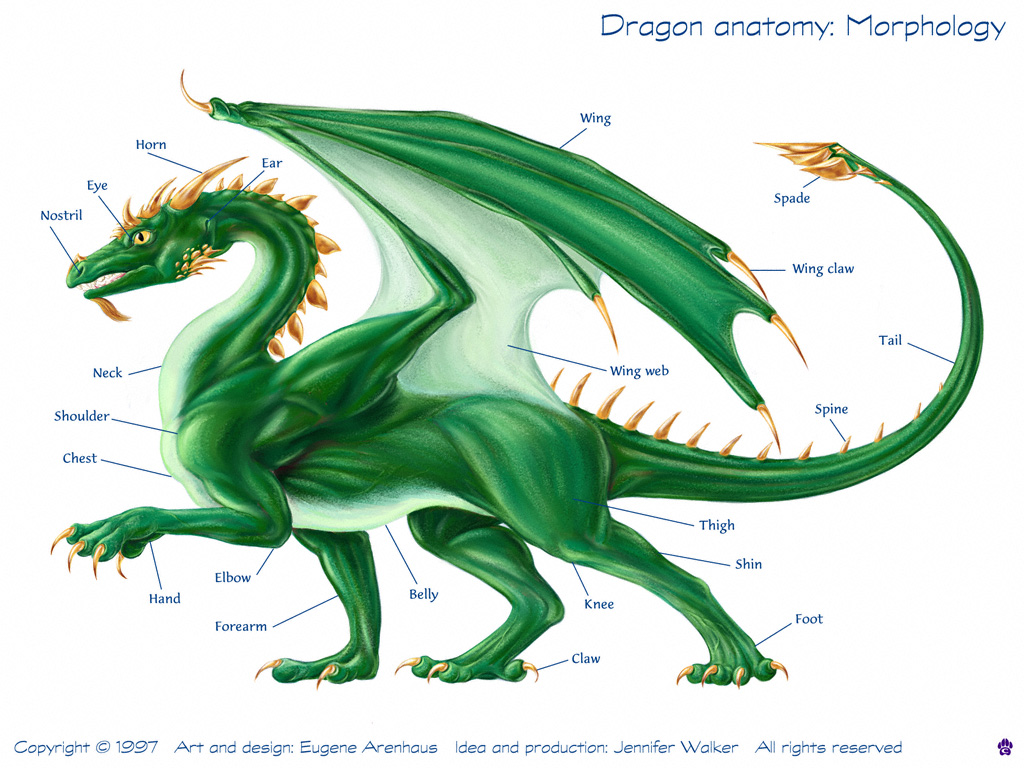
We also shared our mini project #2 - Designer Dragons.  Wow - some very talented artists out there! Combined with their understanding of genetic inheritance, these artists rendered a dragon hatchling.  All hatchlings were from the same clutch (i.e. the parents had the same genetic make up), yet we had a variety of expressed phenotypes in our dragons.  This point is very important for later when we study ecology and evolution!

For those who did not submit all of your project materials and would like to please bring them this week.  Here are a few of the completed dragons.


Looking Ahead


This Thursday we will be looking at the circulatory and respiratory systems.  These two systems are incredibly interconnected.  Please make sure you read/watch so that you will be ready for the lab activities.  Also, we will be coming back to these systems and all the body systems in a couple of weeks when we dissect frogs ;-)

To be completely honest, I have been so swamped with other FILA responsibilities that I am canceling the write-up for the plant lab (don't cheer too loudly).  There's still plenty of great biology work to be done.  I will work hard to get your dragon mini projects back to you soon, with comments and completed rubrics.

Readings and Other Resources


1
RSO Ch. 17 Circulatory & Respiratory Systems
LOE ch 17
CK12 BC 13.27-13.36
CK12 LSC
Circulation - transition, fun School House Rock take on the circulatory system

What do the lungs do? - transition, Ted Ed explains how the respiratory system works

Circulatory System - scholar, Bozeman Science cover the circulatory system

The Respiratory System - scholar, Bozeman science covers the respiratory system


Looking even further ahead


Here is the outline for the rest of the year

Week 1 Circulatory & Respiratory Systems
Week 2 Endocrine, Reproductive, Immune, and Lymphatic Systems
Week 3 Skeletal and Muscular Systems
Week 4 Taxonomy
Week 5 Domains Bacteria and Archaea
Week 6 Kingdom Plantae
Week 7 Kingdoms Fungi and Protista
Week 8 Kingdom Animalia
Week 9 Kingdom Animalia continued
Week 10 Evolution How
Week 11 Evolution Evidence
Week 12 Evolution When
Week 13 Ecology Systems
Week 14 Ecology Cycles
Week 15 Ecology Implications

Sunday, January 17, 2016

Wk 14, Looking Ahead to Wk 15

Plants Lab


This week in class we took a closer look at some plant anatomy.  In particular we looked at the plant reproductive system in both flower and fruit form.  We compared two different flower types, and many different fruit types.  Additionally, there were microscope slides to view that showed plant vascular tissue in the stem and leaf.  There was a LOT to cover.  The next few weeks will also have a LOT to cover.  Make sure you are reading/watching videos so that when you come to class the lab activities are an enhancement of what you read.  While I love teaching all aspects of biology, and wish we could have daily class, we only have one day together each week and it is reserved for laboratory exploration.  You need the basic understanding from the readings, videos, etc. for the labs to be meaningful.

This lab will have a write-up, but it will not be due until the 28th.  I will give you instructions on it in the next blog post.  This week I hope you will focus on the weekly readings/resources below and on completing your dragons.

Looking Ahead

We will be bringing in our completed dragon projects this Thursday! Questions about then project, or to print out any needed parts, please see last week's blog post. You should bring with you

  1. Completed Baby Dragon Record sheet
  2. Your visual representation of your dragon
  3. Answers to the analysis questions in Part C
  4. The Rubric
Scholars, please consider displaying your dragons at Parent Scholar Night!!  

We are moving into animal anatomy and physiology.  There is a lot that can be covered, and we willed about several systems each week.  We will focus on a single system during lab, however.  This week's lab will be on the nervous system.  It will be a shorter lab, after which we will share our dragon projects.  So remember to work on dragon projects, readings, and vocabulary lists.

Readings and Other Resources


15
RSO  Ch. 14 Nervous & Sensory Systems

Ch. 15 Integumentary, Digestive, & Urinary Systems
LOE ch 15 and ch 18, and be sure to read about integumentary system at CK12 BC 13.4-13.22
CK12 BC 13.4-13.22 and 13.37-13.47
CK12 LSC 11.3-11.5 and 11.16-11.20 and  11.36-11.43
Nervous System - transition, School House Rocks

Layers of the Skin - transition, a little silly but accurate

Digestive system - transition, a little silly but accurate

Urinary System - transition, ok really silly but accurate


Nervous System - scholar, Crash Course

Integumentary System - scholar, Crash Course

Digestive System - scholar, Crash Course

Urinary System - scholar, Crash Course, more detail than you need to know but a good video


Friday, January 8, 2016

Wk 13, Looking Ahead to Wk 14

Here There Be Dragons

So happy to see you all yesterday!  We had a recap of genetic inheritance, and discussed the mini project #2.  This project will be due the 21st - we would love to have scholars display their projects at Scholar Parent Night that same day!  

I handed out the Designer Dragon instructions in class - there is a transition version and a scholar version for the instructions, and separate scholar/transition versions of each of the needed sheets.  I am putting links below to two folders on Google Drive.  One has the the sheets, including the instructions I handed out in class (Mairen - there you go!), for the scholar project.  The other folder has the sheets, including the instructions I handed out, for the transition project.
1. Designer Dragon Scholar
2. Designer Dragon Transition

Remember, although I encourage creativity and imagination, the visual representation of your dragon should reflect the phenotype of each trait you determined using the coin flip - not just a really cool dragon from your imagination.  We want to see the variety that can come from a single pair of parents.  This is an attempt to reflect what happens in nature - two individual’s genes can create a great variety of unique offspring.  If you’re not feeling terribly creative, use the Dragon Genetics Template file to trace a dragon and its traits.  I’m very excited to see everyone’s dragon in two weeks!!


Multicellular Organisms and How Life is Organized


We've learned a lot about cells - the chemical components needed to create them, the organelle structures within them, how they reproduce - and we are moving now from the realm of the cell to the realm of the organism.

  • An organism is aindividual living thing that can react to stimuli, reproduce, grow, and maintain homeostasis.

So, some organisms are only made of one cell.  Examples include paramecia, bacteria, and amoeba. This keeps the organism's structure fairly simple, but it also is fairly limited.  Cells can only grow to a certain size before the internal pressure exceeds the strength of the plasma membrane - any larger and they would burst.  Think of a water balloon: Normally these are about softball size.  If you tried to inflate a giant water balloon, say beach ball sized, with the same thin rubber outside material of the softball sized balloon it would burst in your face before you were done filling it.

Cells can, however, work together to make more complex organisms.  Cells working together to perform a similar function are known as tissues.  These tissues can also work together to perform functions, and we call that group of tissues and organ.  One organizational level up, organs can work together to perform functions and we call those organ systems.

Looking ahead

Plant Tissues
We are going to look next week at plant anatomy, and specifically at plant reproduction.  The plant kingdom is a very large group with organisms as diverse as mosses, ferns, giant sequoia, sweet smelling roses and rotten-smelling corpse flowers. 

Vascular plants, those which have vascular tissues (most all plants, except mosses) have three different groups of tissues - ground tissues, vascular tissues, and dermal tissues.    Each of these tissue types give rise to different tissues.

Plants also have organs, such as a flower, root hair, or leaf.  They also have two organ systems - the root system and the shoot system. Both systems are made of tissues from the three tissue groups.

Plant structures, their tissues, organs, and systems, are important for plants to grow large yet still carry out photosynthesis.


Plant Reproduction and Lab
Within the plant kingdom there are a variety of reproductive strategies, but we will look closely at sexual reproduction in flowering plants.  Flowers, which are reproductive organs, are part of the shoot organ system in flowering plants.
This is a corpse flower (also called carion flower, rotting flesh plant, and "eeeeeeewwww, what is that awful smell?!?").  We will not be dissecting one of these stinky giants, but they are amazing to look at.  Instead we will be looking at a much smaller and more sweet smelling flower, a lily. We will also look at other samples of plant tissues.  There will be a write-up on this lab, due on the 21st. This is a report-style write-up, where you report what you observe and do analysis questions.  We will also have experiment style write-ups (like we attempted with the respiration experiment) in the future. 

After plants, we will be going through vertebrate organ systems at a very rapid pace. We will spend four weeks on the 12 organ systems in vertebrates. There is just so much to learn about in biology! Make sure you are reading and watching the videos so that our class time can be used for lab activities and to clarify concepts you read about.  To culminate the anatomy and physiology unit we will be doing a frog dissection.

After human anatomy and physiology, we will spend the last 10 weeks of the semester going over the taxonomy, the diversity of life, its evolution, and ecology.  Since ecology is an area of special interest to me, perhaps we will be able to get a field trip in there too...

Please keep working on your Vocabulary Lists! 

Readings and Other Resources
13
RSO
Ch. 12 Plant Anatomy
Ch. 13 Plant Reproduction
LOE

Ch 22 and Ch 23
CK12 BC

CK12 LSC


Plant Structure and Adaptations - transition, Amoeba Sisters on plant structures

Leaf structures - transition, Teacher's Pet video , a microscopic cross-section of a leaf, showing the specialized cells which form tissue layers in this organ

Flower Reproduction - transition, a very clear, simple overview of flowering plant reproduction

Plant Structures and Anatomy - scholar, Bozeman Science goes over the anatomy of plants, including cells, tissues, organs, and systems

Plant Physiology - scholar, Bozeman Science goes over the function of all those structures

Flowering Plant Reproduction - both, Amoeba Sisters, really great over view of flowering plant reproduction


Monday, December 7, 2015

Wk 11, Looking Ahead to wk 12

Meiosis

I hope you all did the readings and watched the videos last week on meiosis.  It probably seemed very familiar, since it is similar to mitosis.  It is important not to mix these two processes up though! The key things to remember:

  • Mitosis is for making exact copies of cells, and Meiosis is for making unique sex cells (each with half the chromosomes of a normal body cell).
  • A normal body cell in humans has 46 chromosomes, 23 from mom and 23 from dad, and we call this condition diploid and represent it with the symbol 2n.
  • A sex cell, also called a gamete, has 23 chromosomes, and we call this condition haploid and represent it with the symbol n.
  • When a male gamete fuses with a female gamete you get a single new cell with 46 chromosomes, which is diploid, and called a zygote.
  • During meiosis, when sister chromatids line up with each other they can swap genetic information in a process known as  crossing over.


Bioethics

We began a discussion on bioethics in class this week.  After learning about some interesting issues in genetics, from mutations to pet cloning to cybernetic roses, we posed the question, "When is it ethical to alter genetic information?"  There was some good discussion and ideas, and we will be coming back to this question again several times.

Readings and Other Resources

Don't forget to do the readings! And work on vocabulary!
12 Genetics, Inheritance


*Second Mini Project assigned -
Qwotekutesnute*
Ch. 10 Your Inheritance
Ch 11 Intro-Review
CK12 BC 3.1-3.15
CK12 LSC 3.8-3.14
Gregor Mendel - both, Teacher's Pet video on the father of genetic study

Monohybrids and the Punnett Square - both, Amoeba Sisters explain alleles, monohybrid crosses, and the Punnett square

Dihybrid Crosses - scholar, this is also Amoeba Sisters but teaches a slightly more complex Punnett square for two traits.

Sex-linked Traits  - scholar, the genetics of sex-linked genes and how to put them in a Punnett square

Multiple Alleles - scholar, sometimes there are more than just dominant and receive alleles for  a trait and here is how that works


Saturday, November 28, 2015

wk10, looking ahead to wk11

The Cell Cycle


In week 10 we discussed the phases of the Cell Cycle, and spent extra time on cell division, including mitosis.

First in the Cell Cycle our cells grow (G1 phase).  Then they replicate their DNA (S phase).  Then they grow some more, do checks for accuracy, and get ready for mitosis (G2 phase). These three phases together are known as interphase.
Once the cells are done with interphase they enter M phase, also known as cell division.


Ok, so we aren't really doing mathematical division.  It is actually more like multiplication, since we start with one and end up with two.  
Cell division is comprised of two parts - mitosis and cytokinesis. Mitosis is itself comprised of four phases - remember PMAT? Prophase, Metaphase, Anaphase, and Telophase.  Each step is important for orderly production of two identical daughter cells.

Looking Ahead to wk11


Cell division using mitosis is important to create additional somatic (body) cells for growth, or for replacement if the cell is damaged or destroyed. All of this happens within the same organisms.  Some organisms use very similar processes to create duplicate organisms. Examples of this are budding and binary fission. Binary fission is the common mode of reproduction in bacteria - each bacteria (made up of a single cell, but still a distinct organisms) makes a duplicate of itself to create additional bacterial organisms. These types of reproduction, where the new organism is an exact genetic copy of the parent organism, are called asexual reproduction.

Humans and a great many other complex organisms, use a different method of reproduction known as sexual reproduction, where two incomplete sets of DNA from two parent organisms combine to make a genetically unique offspring. In order to produce the needed special cells (called sex cells or gametes), which have only half of the genetic information (haploid), there is a similar but different process to mitosis and it's called meiosis.

So why go through this extra effort of creating cells that have half the genetic information (haploid) just to combine them with another haploid cell from a new organism with complete genetic information (diploid)? Why not just use asexual reproduction like starfish and bacteria and make little clones of ourselves instead? There are several reasons, but the big one is this: genetic variation.    We will take more about genetic variation in wk12 and when we discuss evolution, but for now know that genetic variation is what gives individual organisms of the same species variety - say in birds different feather coloring, different beak shape, different body size, different songs, etc.  It is this variety that allows the species as a whole to adapt to the environment.

Here are the readings and videos/resources for this week.  Don't forget to keep working on your vocabulary.


11 Sexual vs Asexual reproduction, ploidy, meiosis
RSO Ch. 9 Meiosis Divides by Two and Makes You
LOE Ch 12 Intro-Review
CK12 BC 2.36-2.40
CK12 LSC 2.20-2.22
Chromosome Numbers in Mitosis - transition, Amoeba sisters cover the number of chromosomes at different stages in mitosis and meiosis

Meiosis The Great Divide - transition, Amoeba sisters do an overview of meiosis and gamete formation

Meisosis Square Dance - both, Ok, this is funny! But it can also be a good way to remember the phases of meiosis, and what happens at each.  You can use this worksheet that has the lyrics and  questions to clarify the steps

Sexual vs Asexual Reproduction - both, this is an interactive to quiz your understanding of what organisms use sexual reproduction, asexual reproduction, or both.

Meiosis - scholar, Crash Course covering meiosis and the production of gamete cells


Tuesday, November 17, 2015

wk9, looking ahead to wk10

First off, my apologies to you that I wasn't able to be in class last week.  But thanks to teacher Christy and teacher Cindy for filling in!

I hope that you learned a lot in wk 9's readings, because there was definitely a lot to learn.  Some key points to remember:

  • DNA is the molecule that contains our genetic information; it is very long; each molecule of DNA is organized in a tightly wound manner into chromosomes
  • During DNA replication a complete copy of each chromosome is made
  • RNA is a single-stranded nucleotide made directly from DNA; there three types of RNA including messenger RNA (mRNA), ribosomal RNA (rRNA), and transfer RNA (tRNA)
  • RNA is used for transcription (the copying individual genes from the DNA code and moving those copies outside the nucleus) and translation (the forming of polypeptide proteins according to "code")
  • Genes are distinct segments of DNA in the chromosome which code for a single protein/protein complex
Looking ahead to wk 10

The wk10 reading and videos are related to wk9.  The replication of DNA is an important part what is known as the Cell Cycle.  This is basically the life history of a cell - it grows, replicates its DNA, grows some more and checks for mistakes, splits in two, and we start over again.


Each phase and step in the process serves a purpose.  Some cells go through the entire cell cycle at a very rapid pace.  Other cells move through it slowly.  Still other cells, such as neurons, leave the cycle after the G1 phase and go to what is known as G0.  These cells spend so much time functioning they don't have time to replicate.

So finish this week's reading, and check out the additional videos.  Don't forget about your vocabulary list, too.

10 Cell Division, Cell Cycle, Chromosomes, Mitosis, Cytokinesis
RSO Ch. 8 Mitosis
LOE Ch 9 Intro-Review
CK12 BC 2.32-2.35
CK12 LSC 2.17-2.19
Cell Cycle and Mitosis - transition, Amoeba sisters talk about cell cycle and growth. Including cancer

Mitosis: Amazing - transition, Amoeba sisters cover mitosis and the role of chromosomes


Mitosis Dance - both, humorous mitosis dance by college genetics class


Phases of Mitosis - Scholar, a well-done explanation by Bozeman Science looking at all the changes in each phase of mitosis

Mitosis - scholar, Crash Course video on mitosis. Sometimes watching two videos on the same thing can help cement the ideas.

Sunday, November 8, 2015

Wk 8, Looking Ahead to Wk 9

Respiration


This week in lab we reviewed respiration, and how it is like the mirror opposite of photosynthesis.
We also walked through a lab procedure, discussing how to set up an experiment with a hypothesis, independent variable, dependent variable, controlled variables, experimental treatments, controlled treatments, and alternative hypotheses.  We then attempted to observe respiration of bread yeast indirectly by the bubbles of carbon dioxide it produced.  Sadly, because of poorly controlled variables (temperature) and lack of sufficient time we had very unimpressive results.

Sigh. That happens in science though, more often than you might think.  But you probably didn't realize that because you only hear about the exciting results.  Why? Because we don't publish results that are inconclusive.  Therefore, I am scratching this first lab write up.  There's not enough data to write up on!


Don't feel too sad about it though, we still have 4 more labs this year. And I still think the time walking through the parts of an experiment was time well spent.


Looking ahead to wk 9 (and beyond)

The coming weeks are very information heavy.  We will spend our time in class reinforcing ideas from the reading, but if you don't read you're going to be lost.

Wk 9 will cover DNA, DNA replication, RNA, transcription and translation, and the organizational relationship between DNA-genes-chromosomes.  

There is way too much for me to do a short intro, so please do your reading and be mindful of the following:

  • DNA is an incredibly long molecule holding the "code" for living organisms
  • Each DNA molecule is coiled and wound tightly into a structure called a chromosome
  • Distinct segments of DNA on a chromosome, and is the molecular unit of inheritance
  • The central dogma of molecular biology: DNA is transcribed into RNA which is translated into proteins
*In your reading and watching videos be careful not to confuse DNA replication with transcription to RNA*

The wk 9 videos are organized so there is a series for the transition students (Amoeba Sisters) and a series for scholar students (the Australian guy).  There are also three videos to clarify some basic points.  I know there are a lot of video links, but as I said in the beginning this is a lot of material to cover and can be confusing to understand.  Use the videos to solidify the concepts from your reading.  The last two links are for interactives on DNA replication and transcription and translation.

Don't forget to keep working on your vocabulary lists!

9 DNA Structure and function, DNA replication, DNA-genes-chromosomes relationship, RNA structure and function, Protein synthesis (transcription and translation)
RSO Ch. 7 The Message
LOE Ch. 10 Intro-10.3
CK12 BC 2.34
And 4.1-4.7
CK12 LSC 3.1-3.6
DNA Structure and Function - Transition, Amoeba sisters  video about DNA and what it does

DNA Replication - Transition, Amoeba sisters video about DNA replication

Why RNA is Just as Cool as DNA? - Transition, Amoeba sisters video about the important role the types of RNA plays in  protein synthesis

Protein Synthesis and the Lean, Mean, Ribosome Machine - Transition, Amoeba sisters video on how proteins are synthesized


What is DNA and How Does it Work?both, general overview of DNA  from Stated Clearly

What is a gene? - both, general overview of genes from Stated Clearly

From DNA to Protein - both, highlights of the process of protein formation from the DNA code


What is DNA? - Scholar, the first in a series of videos from our Aussie friend on DNA, RNA, genes, chromosomes, how this message codes for and creates proteins.

DNA Replication - Scholar

What is RNA - Scholar


The Genetic Code - Scholar


Interactive on building a DNA molecule
Interactive on transcription and translation
10 Cell Division, Cell Cycle, Chromosomes, Mitosis, Cytokinesis
RSO Ch. 8 Mitosis
LOE Ch. 9 Intro-Review
CK12 BC 2.32-2.35
CK12 LSC 2.17-2.19

Thanksgiving Break
Have fun!
Eat proteins (turkey)
Eat carbohydrates (pie)
Eat fats (gravy)

11 Sexual vs Asexual reproduction, ploidy, meiosis
RSO Ch. 9 Meiosis Divides by Two and Makes You
LOE Ch. 12 Intro-Review
CK12 BC 2.36-2.40
CK12 LSC 2.20-2.22

12 Genetics, Inheritance


*Second Mini Project -
Qwotekutesnute*
RSO Ch. 10 Your Inheritance
LOE Ch. 11 Intro-Review
CK12 BC 3.1-3.15
CK12 LSC 3.8-3.14