Systems, Systems, Systems...
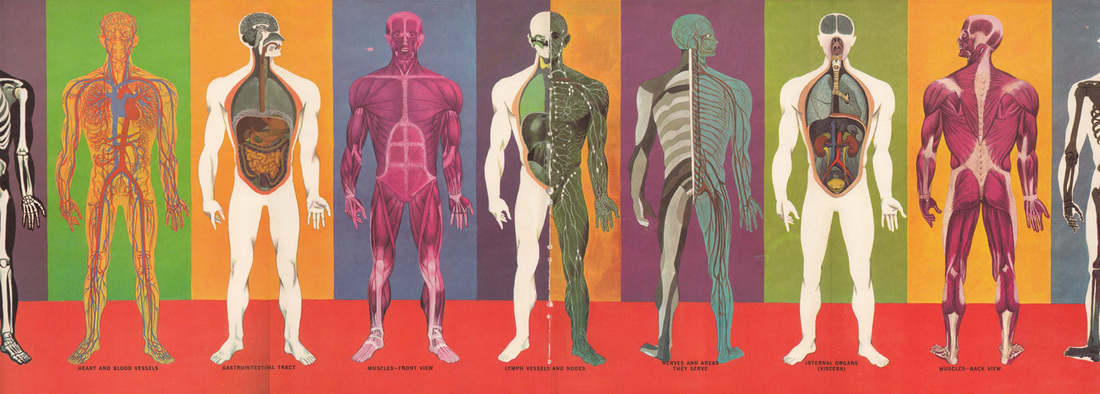
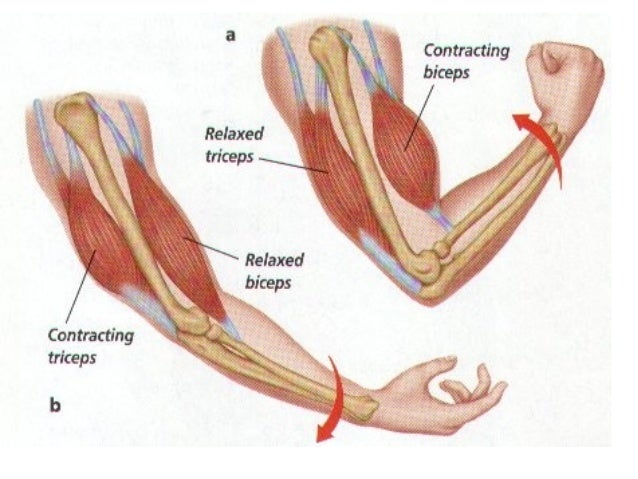
We spent some time reviewing organ systems. There's so much more we could cover with each system - the depth of knowledge in human anatomy and physiology is ever increasing. This week we will ready about two more systems, the muscular and the skeletal. These systems are interconnected, the skeletal system providing the framework and leverage for movement and the muscular system providing the work. Most muscles in the human body work in pairs. Below is an example for the upper arm. The biceps and the triceps form a pair of complementary muscles to flex the arm (biceps) and extend the arm (triceps). The humorous bone, which they surround, gives structure and acts as a lever.
The skeletal system is divided into two systems - the axial system and the appendicular system. When bones come together they create a joint. It is the system of joints which allow our rigid from work to also be flexible. There are several different types of joints, each allowing for different types of movement. Some examples are in the diagram below. Besides movement, and blood cell creation, bones also protect your vital organs.

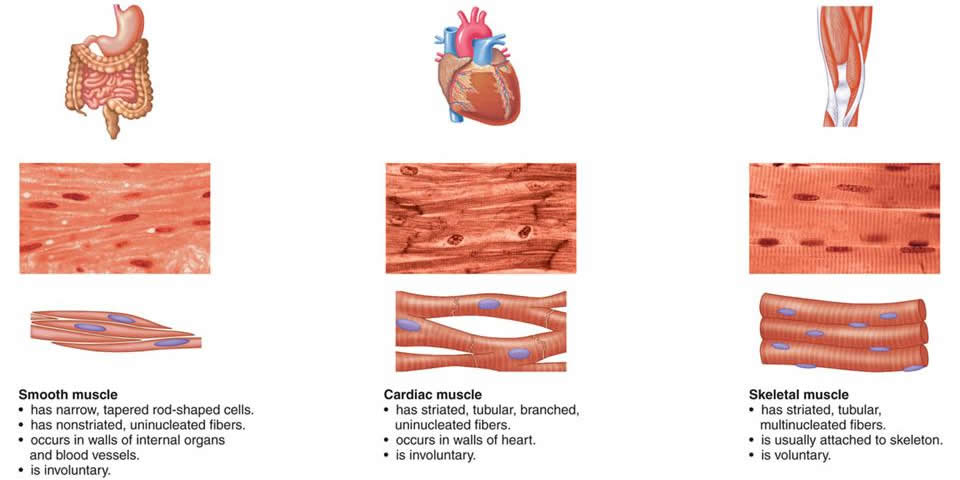
The muscular system is also composed of different types of tissues, namely smooth muscle (involuntary, in organs and blood vessels), cardiac muscle (involuntary, occurs in the heart walls), and skeletal muscle (voluntary, attached to the skeletal system). Each type of muscle is composed of different specialized cells.
Literature Selection
 Part of our Biology course is two colloquia - one on a scientific article, and one on a literary selection. We will hold our colloquia at the end of April. I am hoping to have the literary colloquium on 29th or 30th, in connection with a monster movie! I will poll the class to see who intends to participate and which day works best. The literary selection is actually a choice of Frankenstein, or the Modern Prometheus by Mary Shelly OR The Strange Case of Dr. Jekyll and Mr. Hyde by Robert Louis Stevenson. You may read either book, or an easier adaptation of the book which is true to the original (both the Great Illustrated Classics and the Classic Starts Series are good adaptations). Another option is to listen to the book read aloud (audiobooks rule!).
I will provide reading guides for the non-adapted versions in a couple of weeks. This will have basic synopses of chapters, some vocabulary, and some things to think about while you read.

I am telling you almost 12 weeks in advanced so that you can select a book now and work it into your busy schedules :-)
Here at Librivox you can access free recordings of Frankenstein, or the Modern Prometheus read aloud. Librivox also has free online type versions of the book. Pierce County, Tacoma city, and Timberland Regional libraries all have copies of the book.
Here at Librivox you can access free recordings of The Strange Case of Dr. Jekyll and Mr. Hyde read aloud. Librivox also has free online type versions of the book. Pierce County, Tacoma city, and Timberland Regional libraries all have copies of the book.
Readings and Other Resources
|
3
|
Ch. 18 Skeletal
& Muscular Systems
|
LOE ch 16
|
CK12 BC 13.6-13.13
|
CK12 LSC 11.6-11.11
|
Skeletal System - transition, an
overview of the skeletal system
Muscular System - transition,
overview of the muscular system with a little extra info about ways muscles
move
Skeletal System - scholar, Bozeman
Science overviews the skeletal system
Muscular System - scholar, Bozeman
Science overviews the muscular system, with special attention to the
contraction action of skeletal muscle
|
There are several things to keep track of so let me recap:
- do the Frog Virtual Dissection preLab- do the weekly readings/videos
- choose a book/version for the literary colloquium
- keep up your vocabulary lists

No comments:
Post a Comment
Note: Only a member of this blog may post a comment.