Plantae!
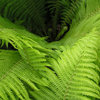
We covered the four major plant groups in lab. These are the bryophytes, seedless vascular plants (tracheophytes, pteridophytes, lycophytes, etc), gymnosperms, and angiosperms. There are other plant groups, but these four comprise the majority of plant life. Remember all plants:
- are eukaryotes
- are multicellular
- are autotrophs
- have cell walls composed of cellulose
- undergo alternation of generations
Some major differences between the four groups are summarized in the table below.
| Bryophyta | Pteridophyta, etc. | Gymnosperms | Angiosperms | |
 |
 |
 |
 |
|
Dominant phase
|
Gametophyte | Sporophyte | Sporophyte | Sporophyte |
Ploidy of plant body
|
Haploid | Diploid | Diploid | Diploid |
Vascular Tissues
|
absent | present | advanced | advanced |
True Leaves
|
absent | present | advanced | advanced |
Roots
|
absent | absent | advanced | advanced |
Seed and covering
|
Seed absent | Seed absent | Seed present, naked | Seed present, coverings |
water required for fertilization
|
yes | yes | no | no |
Flower presence
|
absent | absent | absent | present |
There was insufficient time to get around to all the plant specimen and examine them, so there will be no write-up for this lab! Don't worry, there are still 3 more write-ups before the end of the year ;-)
Introducing Animalia
What is an animal? Lions, tigers, and bears (oh my!)? Sure.
Sponges, corals, and urchins? Yes, those too.
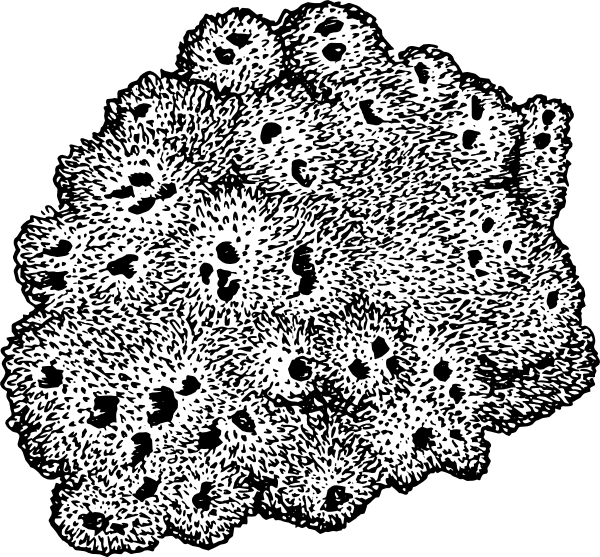


Rotifers and nematodes? Yup.

Weird? Well, there is incredible variety in kingdom Animalia! But organisms in this kingdom all share a few key characteristics:
- eukaryotic
- multicellular
- heterotrophic
- motile
We start to break the animals into different groups by first looking at whether or not the organism has tissues, and whether the developing embryo has germ layers. How animals develop from a fertilized zygote into a morula, then into a blastula, and then possibly a gastrula, and the associated germ layers, is used extensively in classifying animals.
Next we look at what kind of symmetry the organism has - radial or bilateral - and the number of germ layers - 2 (diploblastic) or 3 (triploblastic). (Sponges are the only phyla in kingdom Animalia which are asymmetrical, but they were already branched off our classification system because they have no tissue or germ layer).

Of those organisms which are triploblastic with bilateral symmetry, we can make a further distinction based on whether they have a body cavity (called a coelom). Those without body cavities are called acoelomates, those with an incompletely lined, fluid-filled coelom are called pseudocoelomate, and those with a completely lined, fluid-filled coelom are called coelomates (sometimes the word eucoelomate is used).

We can further divide the coelomates into protostomes and deuterostomes, depending on whether the first opening formed in embryological development is the mouth or the anus.
So, a visual representation of all these classification can be put into a cladogram like the one below.

The phyla on this cladogram (Porifera, Cnidaria, Ctenophora, etc) are representative groups, but only a few of the 35+ phyla in the animal kingdom.
This week we are focusing on invertebrate phyla, or every single phylum in the animal kingdom except phylum chordata. Next week we will focus on phylum chordata.
Readings and Other Resources
14 Kingdom Animalia
- Invertebrates
|
Ch. 31 Kingdom
Animalia
pgs 639-943
|
LOE ch 30, 31, 32
|
CK12 BC 10.1-10.8
(these sections are
short)
|
CK12 LSC 10.1-10.7
(these sections are short)
|
Animals -
transition, Bozeman science does an overview of the kingdom and the ways we
classify animals within the kingdom
Marine Invertebrates - transition,
simple video with a variety of beautiful and interesting invertebrate animals
Animal Development - scholar,
CrashCourse covering animal development, which is used in classifying the
organisms in the kingdom - or -
Introduction to Animal Diversity -
advanced scholar, if you want deeper
understanding then watch this instead of the CrashCourse Animal Development
Video. It is an excellent overview of the classification of the animal
kingdom! There's much in here that is lacking in the readings. While you don't have the lecture note
outlines he talks about, it would be very helpful to get a blank piece of
paper, when prompted, and create the Animalia classification key along with
him
Simple Animals: sponges, jellies, and
octopuses - scholar, CrashCourse covers a few of the simpler animal phyla
Complex Animals: Annelids and Arthropods
- scholar, CrashCourse covers more complex animal phyla
|

No comments:
Post a Comment
Note: Only a member of this blog may post a comment.