Sunday, February 7, 2016

Wk 2, Looking Ahead to Wk 3

Systems, Systems, Systems...
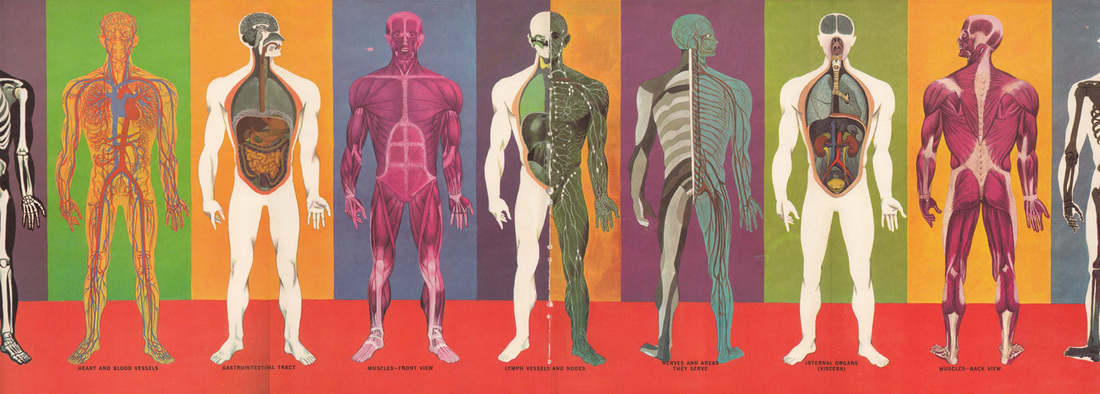

We spent some time reviewing organ systems.  There's so much more we could cover with each system - the depth of knowledge in human anatomy and physiology is ever increasing.  This week we will ready about two more systems, the muscular and the skeletal.  These systems are interconnected, the skeletal system providing the framework and leverage for movement and the muscular system providing the work.  Most muscles in the human body work in pairs.  Below is an example for the upper arm.  The biceps and the triceps form a pair of complementary muscles to flex the arm (biceps) and extend the arm (triceps).  The humorous bone, which they surround, gives structure and acts as a lever.
Bones are living tissues.  There are three bone tissue types: compact tissue (hard, outer portion), cancellous tissue (the spongey inner portion), and subchondral tissue (smooth ends of the bone covered in cartilage).  These tissues are made up of different specialized cells, including osteoblasts (inside the bone, forms new tissues), osteoclasts (large cells in the bone marrow, remove unwanted tissue), osteocyte (long-lived, stay shaped cells which are networked together), and hematopoietic cells (found in the bone marrow, give rise to red blood cells, white blood cells, and platelets).  The skeletal system is made up of other tissues as well, including cartilage and ligaments.

The skeletal system is divided into two systems - the axial system and the appendicular system.  When bones come together they create a joint.  It is the system of joints which allow our rigid from work to also be flexible.  There are several different types of joints, each allowing for different types of movement.  Some examples are in the diagram below.  Besides movement, and blood cell creation, bones also protect your vital organs.


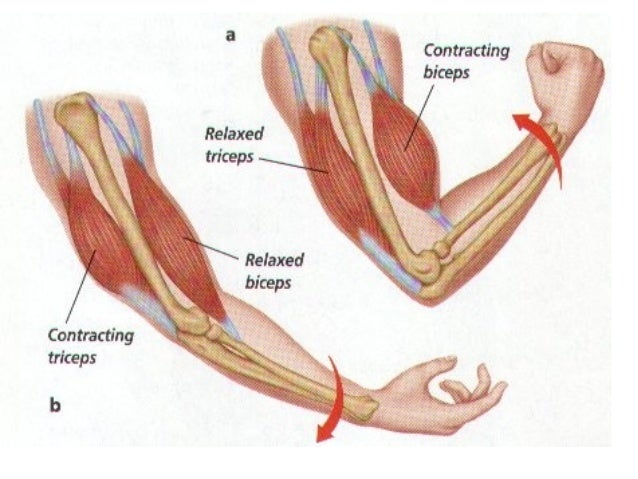
The muscular system is also composed of different types of tissues, namely smooth muscle (involuntary, in organs and blood vessels), cardiac muscle (involuntary, occurs in the heart walls), and skeletal muscle (voluntary, attached to the skeletal system).  Each type of muscle is composed of different specialized cells.


Literature Selection


Part of our Biology course is two colloquia - one on a scientific article, and one on a literary selection.  We will hold our colloquia at the end of April.  I am hoping to have the literary colloquium on 29th or 30th, in connection with a monster movie! I will poll the class to see who intends to participate and which day works best.  The literary selection is actually a choice of Frankenstein, or the Modern Prometheus by Mary Shelly OR The Strange Case of Dr. Jekyll and Mr. Hyde by Robert Louis Stevenson.  You may read either book, or an easier adaptation of the book which is true to the original (both the Great Illustrated Classics and the Classic Starts Series are good adaptations).  Another option is to listen to the book read aloud (audiobooks rule!).

I will provide reading guides for the non-adapted versions in a couple of weeks.  This will have basic synopses of chapters, some vocabulary, and some things to think about while you read.


I am telling you almost 12 weeks in advanced so that you can select a book now and work it into your busy schedules :-)

Here at Librivox you can access free recordings of Frankenstein, or the Modern Prometheus read aloud.  Librivox also has free online type versions of the book.  Pierce County, Tacoma city, and Timberland Regional libraries all have copies of the book.

Here at Librivox you can access free recordings of The Strange Case of Dr. Jekyll and Mr. Hyde read aloud.  Librivox also has free online type versions of the book. Pierce County, Tacoma city, and Timberland Regional libraries all have copies of the book.


Readings and Other Resources


3
Ch. 18 Skeletal & Muscular Systems
LOE ch 16
CK12  BC 13.6-13.13
CK12 LSC 11.6-11.11
Skeletal System - transition, an overview of the skeletal system

Muscular System - transition, overview of the muscular system with a little extra info about ways muscles move


Skeletal System - scholar, Bozeman Science overviews the skeletal system

Muscular System - scholar, Bozeman Science overviews the muscular system, with special attention to the contraction action of skeletal muscle

There are several things to keep track of so let me recap:

- do the Frog Virtual Dissection preLab
- do the weekly readings/videos
- choose a book/version for the literary colloquium
- keep up your vocabulary lists


It's Not Easy Being Green - Frog Dissection Pre-Lab


I know some of you are not looking forward to the frog dissection, and here's Kermit to  sympathize with you.

However, you should all be excited!  Through dissections we have learned and continue to learn a great deal about the structures and functions of animal life.  Our current understanding of human physiology, and a great deal of our modern medical practice, would be missing without the ground work laid by dissection.

To prepare for Thursday's lab complete the Virtual Frog Dissection, both the External Anatomy and the Internal Anatomy portions.  This worksheet, while not required (I am not collecting it), will aid in your understanding of the process and the structures of the dissection.  It is meant to be completed as you do the Virtual Frog Dissection.


  • You will need to be prompt to class, prepared with serious demeanor.
  • Our times is limited and we will be using sharp instruments - horse play or other silliness will not be tolerated.  
  • Plan to stay 10-15 minutes over class time.  
  • If you have long hair, please bring a means to pull it out of your way (elastic).  
  • Aprons and gloves will be worn during dissection.  
  • All structures of the frog will be properly disposed of at the end of the lab.  
  • Although the specimens are dead, we will treat them respectfully.
  • No eating, drinking, chewing (gum, candy, etc) in the lab.
Can't wait to see you Thursday!

Sunday, January 31, 2016

Wk 1, Looking Ahead to Wk 2

Respiratory and Circulatory Systems


Did you know just how important your circulatory system is? The circulatory system is the transport system for the majority of body functions.  The lymphatic system and the nervous system also play a large role in sending things around your body, but the circulatory system is the standout delivery system.

In lab this week we worked on making the circulatory connection with the respiratory system.  We got everyone's heart's pumping, measuring responses in their blood pressure and pulse rate.  We also measured the VO2, or oxygen volume consumption, and used that to estimate the VO2 max, or maximal oxygen consumption.  This is a good measurement of aerobic fitness.

Here are some take-home points for the respiratory and circulatory systems.
  • circulatory system's primary organ is the heart, which pumps the blood throughout the body
  • the human heart, and those of all mammals and birds, have 4 chambers, and the system is closed
  • there are a variety of circulatory systems in the animal kingdom
  • the respiratory system's primary organ is the lungs, made of 3 lobes
  • blood circulates in a figure 8 pattern, heart to lungs, lungs to hear, heart to body, body to heart
  • the oxygen needed for cellular respiration is breathed into the lungs, diffused into the blood at the alveoli of the lungs, and delivered to the cells of the body by the circulatory system
  • the carbon dioxide waste of cellular respiration is picked up by the blood and delivered to the alveoli of the lungs, where it passes into the lungs and is exhaled
  • the circulatory system is responsible for delivering many other things (besides oxygen and carbon dioxide) to and from the cells


This week's lab, The Respiratory-Circulatory Connection, needs to be completed and turned in in 2 weeks (Feb 11th).  The hypotheses and tables should be filled out, and the Analysis Questions answered on a separate piece of paper.  Don't be afraid to ask for help in doing calculations from a parent or sibling!  If you need another copy of the lab you can find it here.  However, you will want to collaborate with your classmates to get the data you need.


Looking Ahead

Reproductive, Endocrine, Immune, and Lymphatic Systems
The readings and videos this week are one four of our body systems! In class we are going to be focusing on only the immune system, however.  Best sure to read and watch about all the systems.


2 Immune System, Lymphatic System, Endocrine System, Reproductive System
Ch. 16 Endocrine & Reproductive Systems

Ch. 19 Immune & Lymphatic Systems
LOE Ch 19 & ch 20
CK12 BC 13.48-13.69
CK12 LSC 11.53-11.73
Cell vs Virus both, a cartoon metaphor that shows different organelles functioning in response to a virus

Immune System Explained - both, shows a simplified explanation of the complicated response of the immune system to a pathogen

Endocrine System - transition, a bit silly but does cover the basics of the endocrine system

Immune System - scholar, Bozeman Science covers the various aspects of the immune system

Endocrine System - scholar, Bozeman Science overview ten of the endocrine glands and an example hormone for each

Reproductive System - scholar, Bozeman Science goes over anatomy, hormones, formation of gametes, and zygote growth development into a fetus


Don't forget to be working on your vocabulary lists, too!

Looking further Ahead

Week three (Feb 11th) we are going to cover skeletal and muscular systems in the readings and videos, and we will be doing our Frog Dissection!! The dissection will take some time - we have 11 systems to find in those frogs!!! Please plan to be to class promptly (early if possible) and to stay a little late into lunch or the end of co-op.  You don't have to wield a scalpel to participate in lab, so please come even if you don't want to do any cutting.


Tuesday, January 26, 2016

Wk 15, Looking Ahead to Wk 1

The Nervous System


In class this week we experimented with our nervous systems.  This system is so amazing, and controls so much of our body functioning, both intentionally and autonomically.  Ask you students about the activities we did.

We also shared our mini project #2 - Designer Dragons.  Wow - some very talented artists out there! Combined with their understanding of genetic inheritance, these artists rendered a dragon hatchling.  All hatchlings were from the same clutch (i.e. the parents had the same genetic make up), yet we had a variety of expressed phenotypes in our dragons.  This point is very important for later when we study ecology and evolution!

For those who did not submit all of your project materials and would like to please bring them this week.  Here are a few of the completed dragons.


Looking Ahead


This Thursday we will be looking at the circulatory and respiratory systems.  These two systems are incredibly interconnected.  Please make sure you read/watch so that you will be ready for the lab activities.  Also, we will be coming back to these systems and all the body systems in a couple of weeks when we dissect frogs ;-)

To be completely honest, I have been so swamped with other FILA responsibilities that I am canceling the write-up for the plant lab (don't cheer too loudly).  There's still plenty of great biology work to be done.  I will work hard to get your dragon mini projects back to you soon, with comments and completed rubrics.

Readings and Other Resources


1
RSO Ch. 17 Circulatory & Respiratory Systems
LOE ch 17
CK12 BC 13.27-13.36
CK12 LSC
Circulation - transition, fun School House Rock take on the circulatory system

What do the lungs do? - transition, Ted Ed explains how the respiratory system works

Circulatory System - scholar, Bozeman Science cover the circulatory system

The Respiratory System - scholar, Bozeman science covers the respiratory system


Looking even further ahead


Here is the outline for the rest of the year

Week 1 Circulatory & Respiratory Systems
Week 2 Endocrine, Reproductive, Immune, and Lymphatic Systems
Week 3 Skeletal and Muscular Systems
Week 4 Taxonomy
Week 5 Domains Bacteria and Archaea
Week 6 Kingdom Plantae
Week 7 Kingdoms Fungi and Protista
Week 8 Kingdom Animalia
Week 9 Kingdom Animalia continued
Week 10 Evolution How
Week 11 Evolution Evidence
Week 12 Evolution When
Week 13 Ecology Systems
Week 14 Ecology Cycles
Week 15 Ecology Implications

Sunday, January 17, 2016

Wk 14, Looking Ahead to Wk 15

Plants Lab


This week in class we took a closer look at some plant anatomy.  In particular we looked at the plant reproductive system in both flower and fruit form.  We compared two different flower types, and many different fruit types.  Additionally, there were microscope slides to view that showed plant vascular tissue in the stem and leaf.  There was a LOT to cover.  The next few weeks will also have a LOT to cover.  Make sure you are reading/watching videos so that when you come to class the lab activities are an enhancement of what you read.  While I love teaching all aspects of biology, and wish we could have daily class, we only have one day together each week and it is reserved for laboratory exploration.  You need the basic understanding from the readings, videos, etc. for the labs to be meaningful.

This lab will have a write-up, but it will not be due until the 28th.  I will give you instructions on it in the next blog post.  This week I hope you will focus on the weekly readings/resources below and on completing your dragons.

Looking Ahead

We will be bringing in our completed dragon projects this Thursday! Questions about then project, or to print out any needed parts, please see last week's blog post. You should bring with you

  1. Completed Baby Dragon Record sheet
  2. Your visual representation of your dragon
  3. Answers to the analysis questions in Part C
  4. The Rubric
Scholars, please consider displaying your dragons at Parent Scholar Night!!  

We are moving into animal anatomy and physiology.  There is a lot that can be covered, and we willed about several systems each week.  We will focus on a single system during lab, however.  This week's lab will be on the nervous system.  It will be a shorter lab, after which we will share our dragon projects.  So remember to work on dragon projects, readings, and vocabulary lists.

Readings and Other Resources


15
RSO  Ch. 14 Nervous & Sensory Systems

Ch. 15 Integumentary, Digestive, & Urinary Systems
LOE ch 15 and ch 18, and be sure to read about integumentary system at CK12 BC 13.4-13.22
CK12 BC 13.4-13.22 and 13.37-13.47
CK12 LSC 11.3-11.5 and 11.16-11.20 and  11.36-11.43
Nervous System - transition, School House Rocks

Layers of the Skin - transition, a little silly but accurate

Digestive system - transition, a little silly but accurate

Urinary System - transition, ok really silly but accurate


Nervous System - scholar, Crash Course

Integumentary System - scholar, Crash Course

Digestive System - scholar, Crash Course

Urinary System - scholar, Crash Course, more detail than you need to know but a good video


Friday, January 8, 2016

Wk 13, Looking Ahead to Wk 14

Here There Be Dragons

So happy to see you all yesterday!  We had a recap of genetic inheritance, and discussed the mini project #2.  This project will be due the 21st - we would love to have scholars display their projects at Scholar Parent Night that same day!  

I handed out the Designer Dragon instructions in class - there is a transition version and a scholar version for the instructions, and separate scholar/transition versions of each of the needed sheets.  I am putting links below to two folders on Google Drive.  One has the the sheets, including the instructions I handed out in class (Mairen - there you go!), for the scholar project.  The other folder has the sheets, including the instructions I handed out, for the transition project.
1. Designer Dragon Scholar
2. Designer Dragon Transition

Remember, although I encourage creativity and imagination, the visual representation of your dragon should reflect the phenotype of each trait you determined using the coin flip - not just a really cool dragon from your imagination.  We want to see the variety that can come from a single pair of parents.  This is an attempt to reflect what happens in nature - two individual’s genes can create a great variety of unique offspring.  If you’re not feeling terribly creative, use the Dragon Genetics Template file to trace a dragon and its traits.  I’m very excited to see everyone’s dragon in two weeks!!


Multicellular Organisms and How Life is Organized


We've learned a lot about cells - the chemical components needed to create them, the organelle structures within them, how they reproduce - and we are moving now from the realm of the cell to the realm of the organism.

  • An organism is aindividual living thing that can react to stimuli, reproduce, grow, and maintain homeostasis.

So, some organisms are only made of one cell.  Examples include paramecia, bacteria, and amoeba. This keeps the organism's structure fairly simple, but it also is fairly limited.  Cells can only grow to a certain size before the internal pressure exceeds the strength of the plasma membrane - any larger and they would burst.  Think of a water balloon: Normally these are about softball size.  If you tried to inflate a giant water balloon, say beach ball sized, with the same thin rubber outside material of the softball sized balloon it would burst in your face before you were done filling it.

Cells can, however, work together to make more complex organisms.  Cells working together to perform a similar function are known as tissues.  These tissues can also work together to perform functions, and we call that group of tissues and organ.  One organizational level up, organs can work together to perform functions and we call those organ systems.

Looking ahead

Plant Tissues
We are going to look next week at plant anatomy, and specifically at plant reproduction.  The plant kingdom is a very large group with organisms as diverse as mosses, ferns, giant sequoia, sweet smelling roses and rotten-smelling corpse flowers. 

Vascular plants, those which have vascular tissues (most all plants, except mosses) have three different groups of tissues - ground tissues, vascular tissues, and dermal tissues.    Each of these tissue types give rise to different tissues.

Plants also have organs, such as a flower, root hair, or leaf.  They also have two organ systems - the root system and the shoot system. Both systems are made of tissues from the three tissue groups.

Plant structures, their tissues, organs, and systems, are important for plants to grow large yet still carry out photosynthesis.


Plant Reproduction and Lab
Within the plant kingdom there are a variety of reproductive strategies, but we will look closely at sexual reproduction in flowering plants.  Flowers, which are reproductive organs, are part of the shoot organ system in flowering plants.
This is a corpse flower (also called carion flower, rotting flesh plant, and "eeeeeeewwww, what is that awful smell?!?").  We will not be dissecting one of these stinky giants, but they are amazing to look at.  Instead we will be looking at a much smaller and more sweet smelling flower, a lily. We will also look at other samples of plant tissues.  There will be a write-up on this lab, due on the 21st. This is a report-style write-up, where you report what you observe and do analysis questions.  We will also have experiment style write-ups (like we attempted with the respiration experiment) in the future. 

After plants, we will be going through vertebrate organ systems at a very rapid pace. We will spend four weeks on the 12 organ systems in vertebrates. There is just so much to learn about in biology! Make sure you are reading and watching the videos so that our class time can be used for lab activities and to clarify concepts you read about.  To culminate the anatomy and physiology unit we will be doing a frog dissection.

After human anatomy and physiology, we will spend the last 10 weeks of the semester going over the taxonomy, the diversity of life, its evolution, and ecology.  Since ecology is an area of special interest to me, perhaps we will be able to get a field trip in there too...

Please keep working on your Vocabulary Lists! 

Readings and Other Resources
13
RSO
Ch. 12 Plant Anatomy
Ch. 13 Plant Reproduction
LOE

Ch 22 and Ch 23
CK12 BC

CK12 LSC


Plant Structure and Adaptations - transition, Amoeba Sisters on plant structures

Leaf structures - transition, Teacher's Pet video , a microscopic cross-section of a leaf, showing the specialized cells which form tissue layers in this organ

Flower Reproduction - transition, a very clear, simple overview of flowering plant reproduction

Plant Structures and Anatomy - scholar, Bozeman Science goes over the anatomy of plants, including cells, tissues, organs, and systems

Plant Physiology - scholar, Bozeman Science goes over the function of all those structures

Flowering Plant Reproduction - both, Amoeba Sisters, really great over view of flowering plant reproduction


Monday, December 7, 2015

Wk 11, Looking Ahead to wk 12

Meiosis

I hope you all did the readings and watched the videos last week on meiosis.  It probably seemed very familiar, since it is similar to mitosis.  It is important not to mix these two processes up though! The key things to remember:

  • Mitosis is for making exact copies of cells, and Meiosis is for making unique sex cells (each with half the chromosomes of a normal body cell).
  • A normal body cell in humans has 46 chromosomes, 23 from mom and 23 from dad, and we call this condition diploid and represent it with the symbol 2n.
  • A sex cell, also called a gamete, has 23 chromosomes, and we call this condition haploid and represent it with the symbol n.
  • When a male gamete fuses with a female gamete you get a single new cell with 46 chromosomes, which is diploid, and called a zygote.
  • During meiosis, when sister chromatids line up with each other they can swap genetic information in a process known as  crossing over.


Bioethics

We began a discussion on bioethics in class this week.  After learning about some interesting issues in genetics, from mutations to pet cloning to cybernetic roses, we posed the question, "When is it ethical to alter genetic information?"  There was some good discussion and ideas, and we will be coming back to this question again several times.

Readings and Other Resources

Don't forget to do the readings! And work on vocabulary!
12 Genetics, Inheritance


*Second Mini Project assigned -
Qwotekutesnute*
Ch. 10 Your Inheritance
Ch 11 Intro-Review
CK12 BC 3.1-3.15
CK12 LSC 3.8-3.14
Gregor Mendel - both, Teacher's Pet video on the father of genetic study

Monohybrids and the Punnett Square - both, Amoeba Sisters explain alleles, monohybrid crosses, and the Punnett square

Dihybrid Crosses - scholar, this is also Amoeba Sisters but teaches a slightly more complex Punnett square for two traits.

Sex-linked Traits  - scholar, the genetics of sex-linked genes and how to put them in a Punnett square

Multiple Alleles - scholar, sometimes there are more than just dominant and receive alleles for  a trait and here is how that works