Tuesday, March 15, 2016

Wk 7, looking ahead to wk 8

Plantae!


We covered the four major plant groups in lab.  These are the bryophytes, seedless vascular plants (tracheophytes, pteridophytes, lycophytes, etc), gymnosperms, and angiosperms.  There are other plant groups, but these four comprise the majority of plant life.  Remember all plants:
  • are eukaryotes
  • are multicellular
  • are autotrophs
  • have cell walls composed of cellulose
  • undergo alternation of generations
Some major differences between the four groups are summarized in the table below.

Bryophyta Pteridophyta, etc. Gymnosperms Angiosperms


Dominant phase
Gametophyte Sporophyte Sporophyte Sporophyte
Ploidy of plant body
Haploid Diploid Diploid Diploid
Vascular Tissues
absent present advanced advanced
True Leaves
absent present advanced advanced
Roots
absent absent advanced advanced
Seed and covering
Seed absent Seed absent Seed present, naked Seed present, coverings
water required for fertilization
yes yes no no
Flower presence
absent absent absent present
There was insufficient time to get around to all the plant specimen and examine them, so there will be no write-up for this lab!  Don't worry, there are still 3 more write-ups before the end of the year ;-)

Introducing Animalia

What is an animal? Lions, tigers, and bears (oh my!)? Sure.  
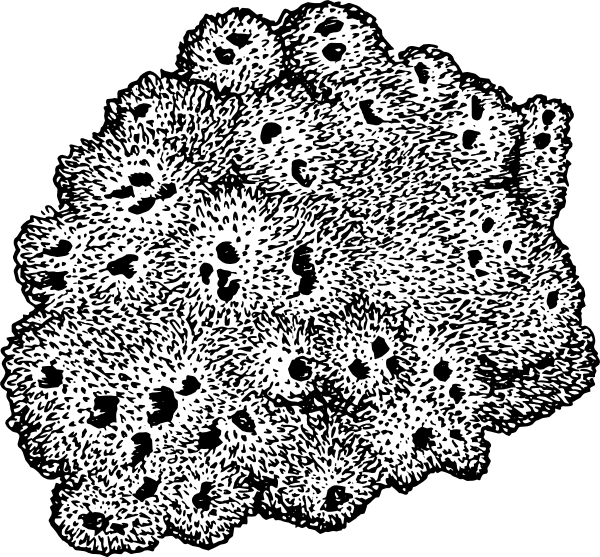
Sponges, corals, and urchins? Yes, those too. 


Rotifers and nematodes? Yup.
Weird? Well, there is incredible variety in kingdom Animalia!  But organisms in this kingdom all share a few key characteristics:
  • eukaryotic
  • multicellular
  • heterotrophic
  • motile

We start to break the animals into different groups by first looking at whether or not the organism has tissues, and whether the developing embryo has germ layers. How animals develop from a fertilized zygote into a morula, then into a blastula, and then possibly a gastrula, and the associated germ layers, is used extensively in classifying animals.  

Next we look at what kind of symmetry the organism has - radial or bilateral - and the number of germ layers - 2 (diploblastic) or 3 (triploblastic). (Sponges are the only phyla in kingdom Animalia which are asymmetrical, but they were already branched off our classification system because they have no tissue or germ layer).


Of those organisms which are triploblastic with bilateral symmetry, we can make a further distinction based on whether they have a body cavity (called a coelom).  Those without body cavities are called acoelomates, those with an incompletely lined, fluid-filled coelom are called pseudocoelomate, and those with a completely lined, fluid-filled coelom are called coelomates (sometimes the word eucoelomate is used).

We can further divide the coelomates into protostomes and deuterostomes, depending on whether the first opening formed in embryological development is the mouth or the anus.

So, a visual representation of all these classification can be put into a cladogram like the one below.

The phyla on this cladogram (Porifera, Cnidaria, Ctenophora, etc) are representative groups, but only a few of the 35+ phyla in the animal kingdom. 

This week we are focusing on invertebrate phyla, or every single phylum in the animal kingdom except phylum chordata.  Next week we will focus on phylum chordata.

Readings and Other Resources


14 Kingdom Animalia -  Invertebrates
Ch. 31 Kingdom Animalia
 pgs 639-943
LOE ch 30, 31, 32
CK12 BC 10.1-10.8
(these sections are short)

CK12 LSC 10.1-10.7
 (these sections are short)
Animals - transition, Bozeman science does an overview of the kingdom and the ways we classify animals within the kingdom

Marine Invertebrates - transition, simple video with a variety of beautiful and interesting invertebrate animals

Animal Development - scholar, CrashCourse covering animal development, which is used in classifying the organisms in the kingdom  - or -

Introduction to Animal Diversity - advanced scholar, if you want deeper understanding then watch this instead of the CrashCourse Animal Development Video. It is an excellent overview of the classification of the animal kingdom! There's much in here that is lacking in the readings.  While you don't have the lecture note outlines he talks about, it would be very helpful to get a blank piece of paper, when prompted, and create the Animalia classification key along with him

Simple Animals: sponges, jellies, and octopuses - scholar, CrashCourse covers a few of the simpler animal phyla

Complex Animals: Annelids and Arthropods - scholar, CrashCourse covers more complex animal phyla


Sunday, March 6, 2016

Wk 6, Looking Ahead to Wk 7


I hope you read all about Protista and Fungi in week 6.
 If you couldn't get enough of it, here are links you might be interested in.   This one is about a group of fossilized fungi thought to be the oldest fossil of a land dwelling organism. And here is an article about an amoeba with an immune response and how it might be helpful in developing treatments for human immune diseases. This one features the musical talents of some teenage biology students extolling the wonders of Protista. And apparently Protista, besides giving rise to Fungi, Plantae, and Animalia, are the ancient Muses of biology rap and have inspired yet another video.

Oh, and check out this article about sending cryptoendolithic fungus into space to see how it fared in mars-like conditions.

ET Found Home?

And speaking of life beyond earth... This week in class we discussed the conditions necessary for life on earth or anywhere for that matter.
Liquid Water
Source of Energy (for photosynthesis, chemosynthesis, etc)
Raw Materials (i.e. organic molecules for building cell structures)
Protection from Radiation
Temperatures at which life has been known to exist (roughly -15 to 120 degrees C)

We then took these parameters and evaluated extraterrestrial planets (and moons) to see which are the most likely to be able to support life. Here is a video that explains astrobiology in simple terms.
This week we will quickly finish up talking about astrobiology, hand out the Astrobiology Mini Project, and move on to the evolution and diversity of kingdom Plantae.

Kingdom Plantae

The plant kingdom has amazing variety, but all species in the kingdom share certain characteristics.  They are all
  • eukaryotes
  • autotrophs
  • multicellular
  • have cell walls made of cellulose
  • undergo alternation of generations (spend a portion of their lives as haploid organisms, and a portion in diploid form)
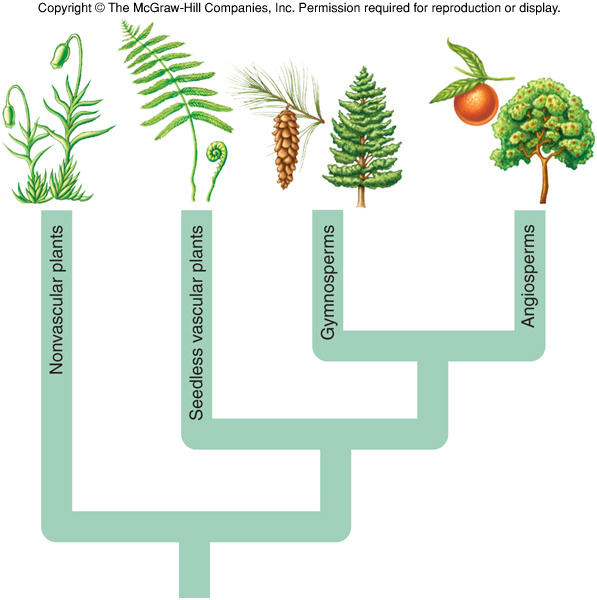
The kingdom is made up of many monophyletic groups, but four of these represent the overall phylogenetic diversity of the kingdom.  These are the primitive non-vascular  mosses and liverworts (Bryophytes), the vascular but seedless ferns (Pteridophytes), the vascular naked-seeded plants like pines (Gymnosperms), and the vascular flowering plants (Angiosperms).

Kingdom Plantae includes species which have undergone amazing adaptations (we'll talk more about this in the evolution and ecology units), which account for both variety in beauty and function.  They've also made some pretty weird adaptations too.  Check out this week's videos for more.


13
RSO Ch. 30 Kingdom Plantae
LOE ch 29
CK12 BC 9.1-9.10 and 9.18-9.24
CK12 LSC 7.1 and 7.4-7.14
Plant Evolution - transition, this video has no sound, but gives you a visual walkthrough of plant evolution and the major groups (taxa) of plants

Plants Intro - scholar, Bozeman Science video that gives a great intro to the variety of plant
Life

10 Most DEADLY Plants on Earth - both, making plants more intriguing, and showing some variety

Monocots vs Dicots - both, how to identify these two types of flowering plants, and a few exceptions

Plants Behaving Badly: Murder and Mayhem - IF YOU WANT here is a 45 documentary about carnivorous plants, narrated by David Attenborough.  This also makes nice connections to evolution and ecology, our next two units

So for week 7
  • do the readings and watch the videos
  • keep accumulating vocabulary words
  • get your copy of Frankenstein or Jekyll and Hyde lined up (begin reading if you wish, but  if you get stuck or feel overwhelmed I will be handing out a reading guide for Frankenstein in week 8)


Monday, February 29, 2016

Wk 5, Looking Ahead to Wk 6

Archaea, Bacteria, and Aliens

No, I don't mean little green men.  Current ideas around life in our solar system (outside of earth) are centered on microscopic life - the kind of life that evolved on earth early in it's 4.5 billion year history.  Astrobiology is the study of the origin, evolution, distribution, and future of life in the universe: extraterrestrial life and life on Earth. Astrobiologists currently study the extremophiles of earth, much of which are found in domains Archaea and Bacteria, to theorize what kind of life there might be and where it might be found.

In class this week we discussed some examples of extremophiles, the conditions in which they live, and similar conditions predicted on extraterrestrial - this just means outside of earth - bodies (moons, planets, comets, etc).  Astrobiology is currently a rather young and small field of science.  However, with ever increasing interest in space and in human travel in space, astrobiology will likely grow in importance.  And in the mean time it makes studying Archaea and Bacteria a little more interesting!

For week 6 we will begin our next mini project - Earth as a Model for Alien Worlds.


Looking Ahead to Wk 6


This week we will cover two of the kingdoms in domain Eukarya.  Recall that all life can be classified into one of three domains, Archaea, Bacteria, or Eukarya.  Archaea and Bacteria contain prokaryotic life, while Eukarya is full of eukaryotes.  Domain Eukarya is made up of four kingdoms - Protista, Fungi, Plantae, and Anamalia.  
Protista
Protists are a group of mainly unicellular eukaryotes, though some are colonial and some, like algae, are multicellular.  As eukaryotes they have a nucleus and membrane bound organelles.  Protists can be motile (move around) using a variety of means like flagella and cilia, or they can be immobile.  They have a variety of reproductive strategies - asexul, sexual, or sometimes combinations of the two.  They can be heterotrophs or autotrophs.  

Really, the group is best defined as all eukaryotes except animals, plants, and fungi.  In this sense kingdom Protista is not monophyletic.  As scientists study more about the great variety of protists the phylogeny (evolutionary relationships) will become more clear.  By the time you are teaching biology to your own children it is very likely the classification for this group will have changed.

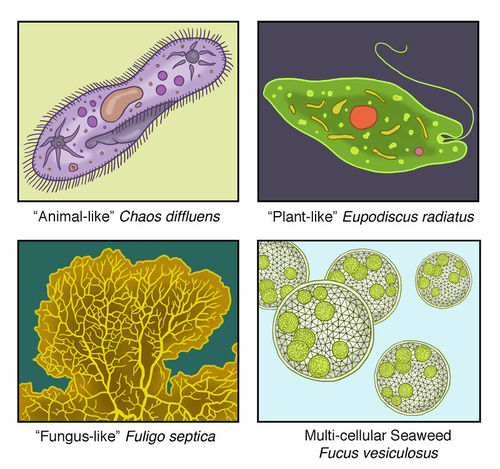
Protists are generally categorized as animal-like (the protozoans), plant-like (the algaes, diatoms, dinoflagellates, and euglenoids) or fungus-like (the slime molds).


Fungi
Fungi have a great diversity of morphology and habitat. They are heterotrophic, typically secreting enzymes out of their bodies to digest other organisms and then reabsorbing the digested nutrients.  They have cell walls made of chitin, while the cell wall in plants is made of cellulose. They are often symbiotic or parasitic to plants or animals.  They have a variety of reproductive strategies - sexual and asexual, and even periods of their life cycle in which they do not reproduce at all.  Structurally, fungi are made up of fine, feathery filaments called hyphae.  These hyphae can combine into mycelium.  You may notice mushrooms have a spongey feel to them - this is because it is not exactly solid but made up of a mass of tightly packed hyphae.

Kingdom Fungi has five main phyla - the sac or cup fungui and yeasts (the ascomycota), the club fungus (the basidiomycota), the mostly single-celled, aquatic plant parasites called chytrids  (the chytridiomycota), the plant symbiotic mycorrhiza or AM fungi (the glomeromycota), and the zygospores (the zygomychota). 


And sometimes when you have protists and fungi living together you get lichen...


Lichen absorbing water from its surroundings (time-lapsed). Notice all the other critters living in the lichen.

Readings and Other Resources

6
RSO Ch. 32 Kingdoms Fungi & Protista
LOE ch 27 and ch 28
CK12 BC 8.1-8.6 and 8.8-8.14
CK12 LSC 6.1-6.11
Protists - transition, quick but thorough overview of the kingdom protista

What is a fungus - transition, Scrapbook animation covering some highlights of kingdom fungi

Paramecium - both, how a paramecium eats

Amoeba lunch - both, video of an amoeba engulfing and digesting two paramcia

Fungus: The Plastic of the Future - both, if you'd like to, watch this video about a very innovative idea: using fungi as structural material for things like packaging and furniture. 

Protists - scholar, Bozeman Science gives an overview of kingdom protista

Fungi - scholar, Bozeman Science gives an overview of kingdom fungi

This week:
  • do the readings and watch the videos
  • work on vocabulary
  • locate your book of choice for the colloquium 

Monday, February 22, 2016

Wk 4, Looking Ahead to Wk 5

Frog Dissection Recap

You did it - you made it through frog dissection!! I was very pleased with lab this week.  There was some great dissecting skill, lots of discoveries and learning, and no one vomited or fainted.  It would have been nice if one of our specimen were a male, but we managed to get 8 our to 8 female frogs.  


2nd Hour at work

T shows off her mad scalpel skills (beautiful heart specimen!)


I hope that in examining the frogs you have a better understanding of your own anatomy.  Of course you aren't a frog, but on the grand scale of life you are so very close in structure to a frog (much more so than to a bacteria).

And speaking of bacteria, we are spending week five covering the two prokaryotic domains, Archaea and Bacteria.


Archaea and Bacteria


We read last week about classification, or putting organisms into different groups (taxa) with similar organisms.  The most inclusive taxon (single of taxa) is the Domain.  All life is classified into one of three domains - Archaea, Bacteria, or Eukarya.  Eukarya includes the four Kingdoms Protista, Fungi, Plantae, and Anamalia.  We will cover these kingdoms in the next several weeks...


...but for this week we will focus on domains Archaea and Bacteria.  Bacteria and Archaea both are prokaryotes: single-celled organisms lacking true nuclei and other membrane-enclosed organelles. Bacteria and archaea, however, differ in cell wall characteristics and membrane lipid composition. They also differ in RNA polymerase structure and, therefore, protein synthesis.

Archaea are the oldest, evolutionarily, and came into existence at a time the earth was still young - about 3.5 billion years ago.  The conditions on earth at that time were much more extreme - excessive UV radiation, extremes of temperature, very high concentrations of salt, extremes of pH, no atmospheric oxygen, and loads of atmospheric carbon monoxide, carbon dioxide, methane, and ammonia.  Today, archaea are still found in these extreme environments where they persist on earth, places like hydrothermal vents on the sea floor, high altitude ice sheets, permafrost, hot springs, and the Dead Sea.  We call organisms which live in these extreme environments extremophiles. Note, not all members of Archaea are extremophiles, and there are also extremophiles in domains Eukarya and Bacteria.

Bacteria arose about 3 billion years ago, and they are everywhere.  There are more bacteria in one person's mouth than there are people on the earth!  In fact, there are so many bacteria in the average human body that if we could isolate them all they would weight about 4 pounds.  If you think that is amazing, here's a link with more amazing bacteria facts. Many types of bacteria cause disease in humans, but many other types of bacteria live symbiotically or commensally in or on use. Bacteria are found not just in and on humans, but in and on places all over the earth.

Readings and Other Resources

5
RSO Ch. 29 Domains Bacteria & Archaea
LOE this week Read either CK12 BC or CK12 LSC
CK12 BC 7.1-7.7
CK12 LSC 5.1-5.7
Domains and Kingdoms of life - transition, Ricochet Science covers Bacteria and Archaea (and Eukarya, but we will cover Eukarya in the next several weeks)

Bacteria: The Good, the Bad, and the Kind of Gross - transition, Amoeba Sisters talk about bacteria and anti biotics

Microbe Evolution and Classification both - excellent animation on the topic, with the bonus of reviewing some things we've already covered this year.  *You have to click on the link in the right hand column found under Microbiology=> Scientific Animations, and then choose Microbe Evolution and Classification (lower right of the 4 animations that come up).  It moves fast, but if you click on the box in the upper left corner of the animation it will stop - you can use this as a kind of pause button in order to finish reading before the animation moves on.

Antibiotic-Resistant Superbugs - both, It's Okay to Be Smart, gives some relevancy to studying Bacteria

The Three Domains of Life - scholar, Bozeman Science covers al three domains and what characteristics distinguish each

Old & Odd: Archaea, Bacteria &Protists - scholar, Crash Course covers Bacteria and Archaea (and Protista, even though we will cover it next week)

Don't forget to:

  • do the readings and watch the videos
  • keep building your vocabulary list
  • hand in Respiratory-Cardiovascual lab (if you haven't already)
  • email me pictures of your petri dishes (if you haven't already)
See you Thursday!


Sunday, February 14, 2016

Wk 3, Looking ahead to Wk 4

Please excuse my absence

 I hope that you had fun reviewing some past topics from our course this week.  I am sad that we will not be able to do the activity on Taxonomy, but be sure to read the blog post, the readings, and watch the videos.

Also, I forgot in the last update to remind everyone about the Respiratory-Circulatory Connection lab write-up! Please don't forget to bring your lab write-up to class this week.

Taxonomy

Taxonomy is the systematic classification of life on earth.  With all those millions of species on earth, we need a universal way of talking about them.  The answer is taxonomy.

People have been classifying their surroundings for time immemorial.  Aristotle developed a simple system of classifying living organisms over 2000 years ago.  About 300 years ago Carl Linnaeus also developed a system of classification, attempting to make the names we give organisms universal and concise.  He used morphology, or the shape (appearance) of things, to put them into groups, and ultimately give each type of organism a two-part name - it's binomial nomenclature.   This two part name is made up of two Latin words, one representing an organisms genus and the other the organisms species.  For example, the scientific name for a koala is Phascolarctos cinereus.     

Sometimes scientists get a little silly and create non-traditional names, but they are still Latin-ized and written in Genus species form.  Take for example this beetle in the genus Agra - it's scientific names is Agra cadabra  (no kidding!)

Silliness aside, we have a hierarchy of classification groups.  The first grouping, Domain, is the most inclusive, will the final grouping, species, is restricted to a single species.
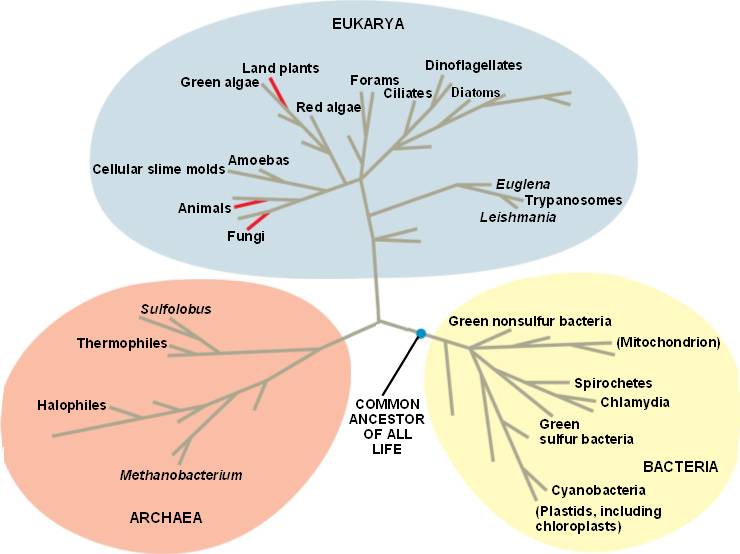
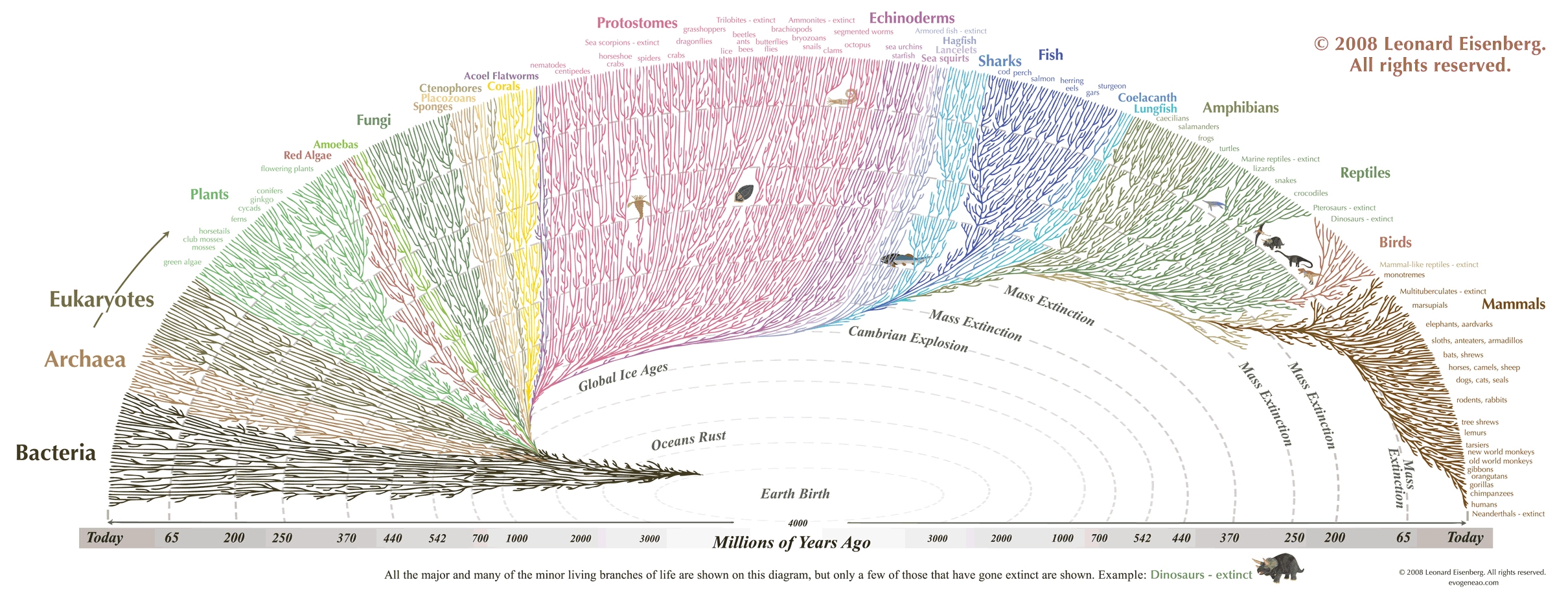
We don't use the exact system that Linnaeus described any longer.  Modern taxonomy relies on more than just morphology to classify organisms.  We also use physiology, geography, behavior, and (probably most definitively) genetics.  Using modern biological technologies we can sequence organisms' DNA and compare them and attempt to put them into a Tree of Life.  This is known as phylogenetics.  The artistically rendered phylogenetic tree below gives you a visual idea of how we attempt to show the connection of all life to a single evolutionary ancestor.

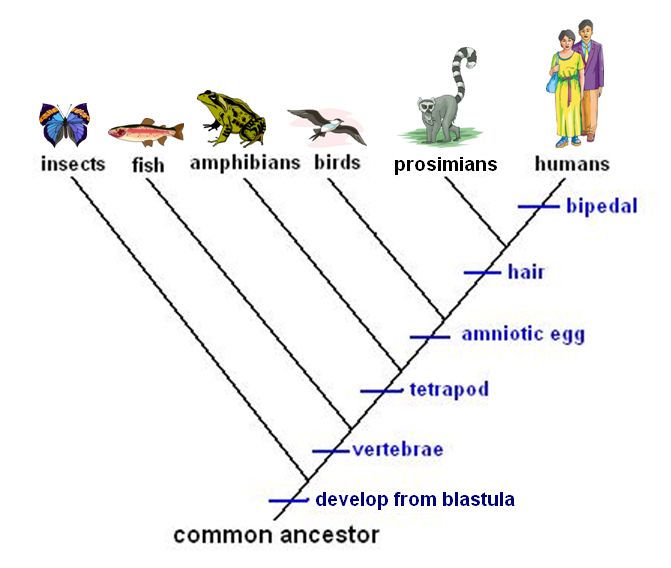
Another tree-like chart we use to show the relationship between both living organisms and extinct ancestors, is called the cladogram.  A cladogram depicts the evolutionary relationships among these organisms, each branching point representing a common ancestor, and the spaces between branches representing shared derived characteristic of all the organisms beyond that point on the cladogram. Below is an example of a simple cladogram, with some shared derived characteristics listed.

Looking ahead to Week 4

  • Frog Dissection is happening this week!! Come to class prepared, having done the prelab, on time, and ready to work.
  • Respiratory-Circulatory Connection lab write up is due this week.
  • Don't forget to be thinking about which book you would like to read for the colloquium, and get your hands on a copy.
  • Keep working on those vocabulary lists (all sorts of great words in this week's readings!).


Here are the readings and videos for this week

4 Classification and Taxonomy
RSO Ch. 28 Taxonomy
LOE this week please use CK12 BC 5.11
CK12 BC 5.11
CK12 LSC extra reading
Classification of Life - transition, this is a very basic overview of classification

Taxonomy - scholar, Crash Course covers basic ideas in taxonomy and overviews the domains and the kingdoms of eukarya

Phylogenetics - scholar, Bozeman Science covers phylogenetics, and the basics of reading a cladogram


Sunday, February 7, 2016

Wk 2, Looking Ahead to Wk 3

Systems, Systems, Systems...


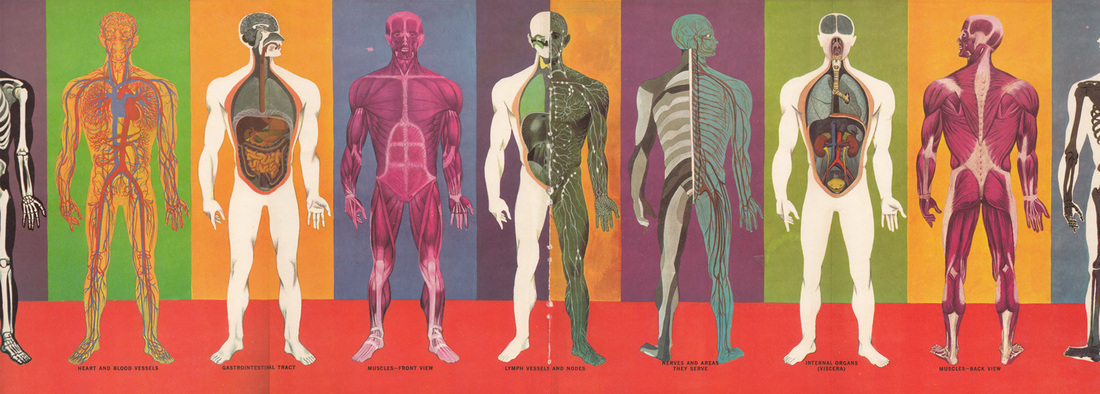
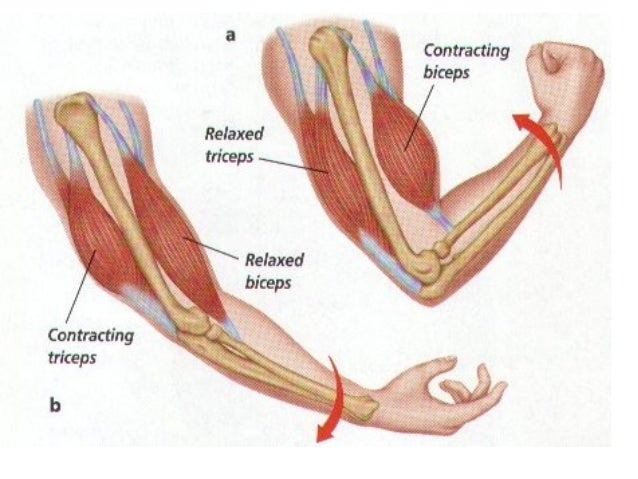
We spent some time reviewing organ systems.  There's so much more we could cover with each system - the depth of knowledge in human anatomy and physiology is ever increasing.  This week we will ready about two more systems, the muscular and the skeletal.  These systems are interconnected, the skeletal system providing the framework and leverage for movement and the muscular system providing the work.  Most muscles in the human body work in pairs.  Below is an example for the upper arm.  The biceps and the triceps form a pair of complementary muscles to flex the arm (biceps) and extend the arm (triceps).  The humorous bone, which they surround, gives structure and acts as a lever.
Bones are living tissues.  There are three bone tissue types: compact tissue (hard, outer portion), cancellous tissue (the spongey inner portion), and subchondral tissue (smooth ends of the bone covered in cartilage).  These tissues are made up of different specialized cells, including osteoblasts (inside the bone, forms new tissues), osteoclasts (large cells in the bone marrow, remove unwanted tissue), osteocyte (long-lived, stay shaped cells which are networked together), and hematopoietic cells (found in the bone marrow, give rise to red blood cells, white blood cells, and platelets).  The skeletal system is made up of other tissues as well, including cartilage and ligaments.

The skeletal system is divided into two systems - the axial system and the appendicular system.  When bones come together they create a joint.  It is the system of joints which allow our rigid from work to also be flexible.  There are several different types of joints, each allowing for different types of movement.  Some examples are in the diagram below.  Besides movement, and blood cell creation, bones also protect your vital organs.


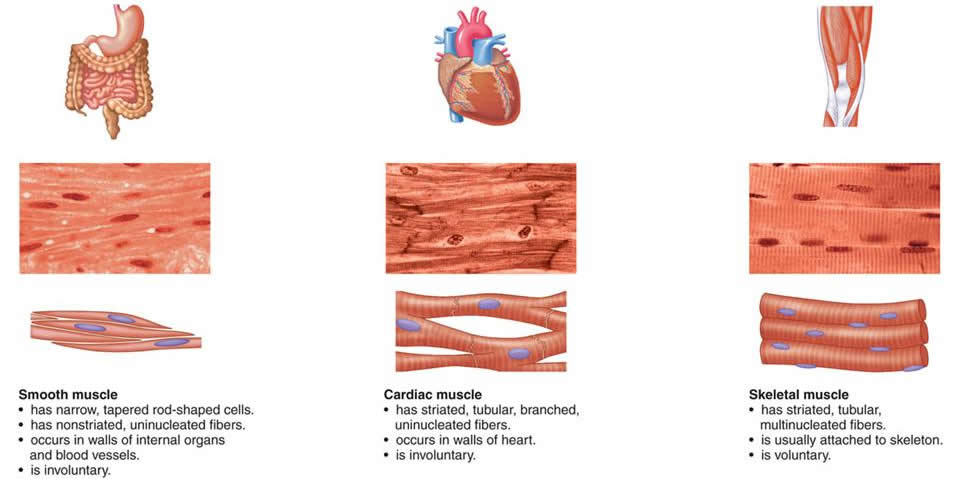
The muscular system is also composed of different types of tissues, namely smooth muscle (involuntary, in organs and blood vessels), cardiac muscle (involuntary, occurs in the heart walls), and skeletal muscle (voluntary, attached to the skeletal system).  Each type of muscle is composed of different specialized cells.


Literature Selection


Part of our Biology course is two colloquia - one on a scientific article, and one on a literary selection.  We will hold our colloquia at the end of April.  I am hoping to have the literary colloquium on 29th or 30th, in connection with a monster movie! I will poll the class to see who intends to participate and which day works best.  The literary selection is actually a choice of Frankenstein, or the Modern Prometheus by Mary Shelly OR The Strange Case of Dr. Jekyll and Mr. Hyde by Robert Louis Stevenson.  You may read either book, or an easier adaptation of the book which is true to the original (both the Great Illustrated Classics and the Classic Starts Series are good adaptations).  Another option is to listen to the book read aloud (audiobooks rule!).

I will provide reading guides for the non-adapted versions in a couple of weeks.  This will have basic synopses of chapters, some vocabulary, and some things to think about while you read.


I am telling you almost 12 weeks in advanced so that you can select a book now and work it into your busy schedules :-)

Here at Librivox you can access free recordings of Frankenstein, or the Modern Prometheus read aloud.  Librivox also has free online type versions of the book.  Pierce County, Tacoma city, and Timberland Regional libraries all have copies of the book.

Here at Librivox you can access free recordings of The Strange Case of Dr. Jekyll and Mr. Hyde read aloud.  Librivox also has free online type versions of the book. Pierce County, Tacoma city, and Timberland Regional libraries all have copies of the book.


Readings and Other Resources


3
Ch. 18 Skeletal & Muscular Systems
LOE ch 16
CK12  BC 13.6-13.13
CK12 LSC 11.6-11.11
Skeletal System - transition, an overview of the skeletal system

Muscular System - transition, overview of the muscular system with a little extra info about ways muscles move


Skeletal System - scholar, Bozeman Science overviews the skeletal system

Muscular System - scholar, Bozeman Science overviews the muscular system, with special attention to the contraction action of skeletal muscle

There are several things to keep track of so let me recap:

- do the Frog Virtual Dissection preLab
- do the weekly readings/videos
- choose a book/version for the literary colloquium
- keep up your vocabulary lists


It's Not Easy Being Green - Frog Dissection Pre-Lab


I know some of you are not looking forward to the frog dissection, and here's Kermit to  sympathize with you.

However, you should all be excited!  Through dissections we have learned and continue to learn a great deal about the structures and functions of animal life.  Our current understanding of human physiology, and a great deal of our modern medical practice, would be missing without the ground work laid by dissection.

To prepare for Thursday's lab complete the Virtual Frog Dissection, both the External Anatomy and the Internal Anatomy portions.  This worksheet, while not required (I am not collecting it), will aid in your understanding of the process and the structures of the dissection.  It is meant to be completed as you do the Virtual Frog Dissection.


  • You will need to be prompt to class, prepared with serious demeanor.
  • Our times is limited and we will be using sharp instruments - horse play or other silliness will not be tolerated.  
  • Plan to stay 10-15 minutes over class time.  
  • If you have long hair, please bring a means to pull it out of your way (elastic).  
  • Aprons and gloves will be worn during dissection.  
  • All structures of the frog will be properly disposed of at the end of the lab.  
  • Although the specimens are dead, we will treat them respectfully.
  • No eating, drinking, chewing (gum, candy, etc) in the lab.
Can't wait to see you Thursday!